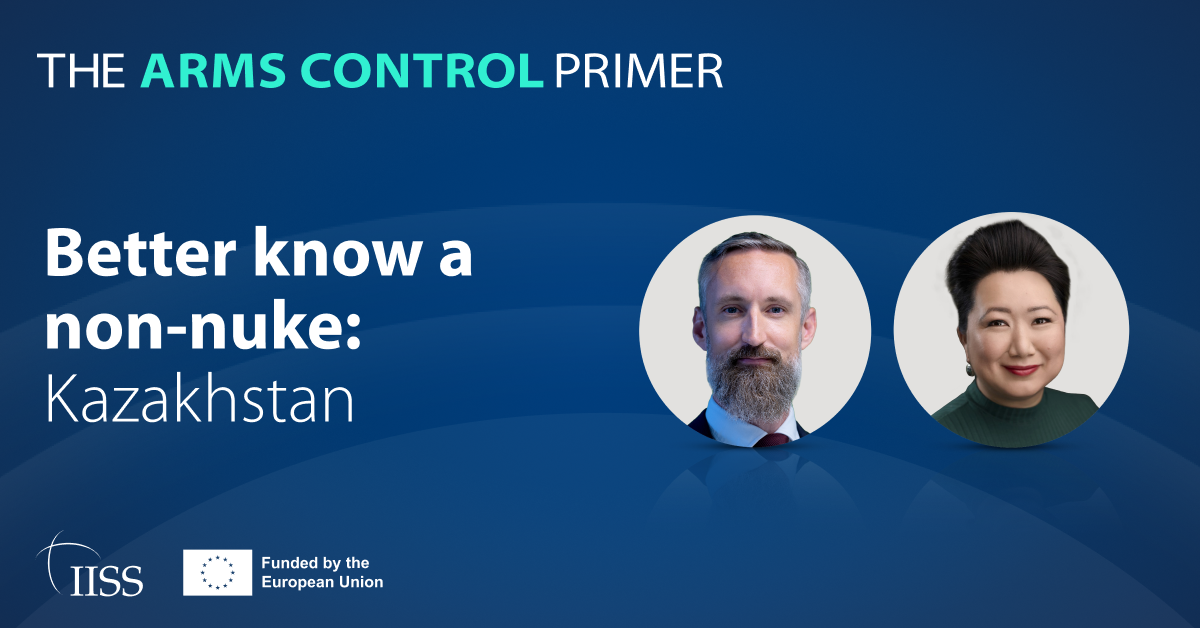
Kazakhstan was central to the Soviet Union’s nuclear weapons complex, hosting more than 450 nuclear tests, vast fissile material production facilities and, up to 1991, over a thousand nuclear warheads. In this episode of The Arms Control Primer, host Dr Alexander Bollfrass speaks with Dr Togzhan Kassenova about the human and environmental toll of testing at Semipalatinsk, the rise of Kazakhstan’s anti-nuclear movement, and the difficult political choices that led the country to relinquish the world’s fourth-largest nuclear arsenal. Tracing Kazakhstan’s accession to the NPT, its role in the Budapest Memorandum, and its later leadership on the TPNW, the conversation explores security assurances, irreversibility in disarmament, and what Kazakhstan’s experience means for today’s debates on deterrence, sovereignty and nuclear risk.

Author